China Top 10 Stereo Jack Manufacturers for Global Buyers
A Stereo Jack may look like a small metal socket, but its performance depends on details buyers can easily overlook. Contact geometry, plating, insulation, and mounting tolerance all affect signal stability and service life. In a busy production line, a fraction of a millimeter can matter. So can the consistency between samples and later shipments.
As a buyer-focused editorial viewpoint, connector specialist Alex Chen puts it this way: “A reliable Stereo Jack is judged not by its size, but by how consistently it connects.” This is a guiding line for this article, not a verified quotation from a published interview. The distinction matters. Supplier claims should be checked against drawings, test reports, and samples—not repeated as proof.
This guide examines ten Stereo Jack manufacturers serving global buyers, with attention to product range, customization, quality controls, and communication. It also considers practical sourcing questions: Does the supplier provide clear specifications? Can it explain its inspection process? Are lead times and sample terms stated plainly? Look closely. A polished catalog is useful, but it cannot reveal every production weakness. No shortlist is perfect, and rankings depend on the buyer’s application. A compact audio device may need a different jack from a studio mixer or portable instrument. The right choice begins with fit, electrical requirements, and dependable evidence—not a bold promise.
Stereo Jacks: Types, Components, and Common Applications
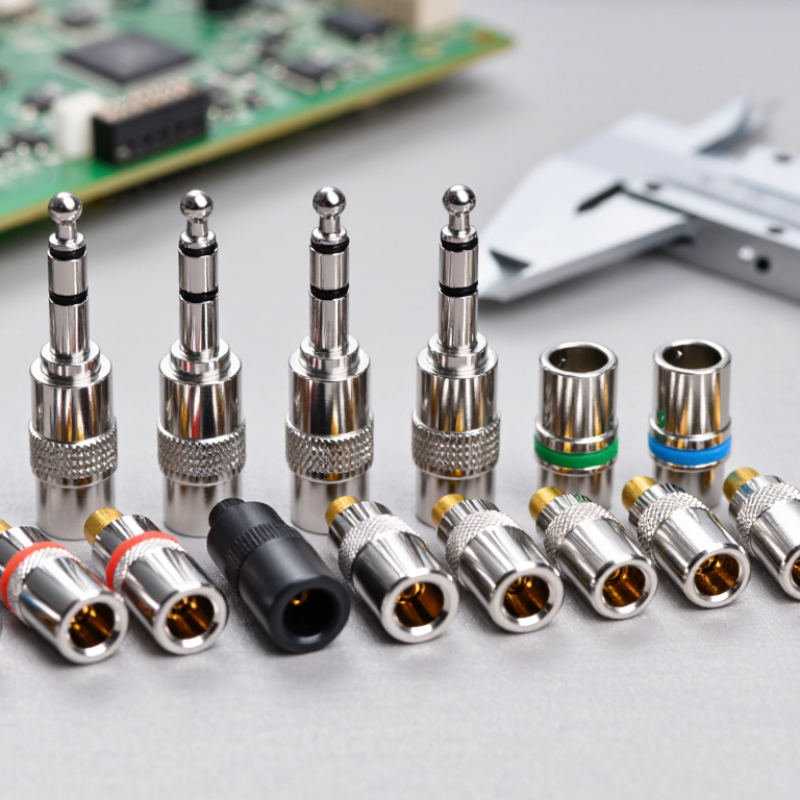
Stereo jacks carry left and right audio channels through a compact connection. Common plug diameters include 3.5 mm and 6.35 mm, while conductor layouts often use TS, TRS, or TRRS formats. A TRS plug typically has three conductive sections for left audio, right audio, and ground. A TRRS plug adds another contact, often for a microphone or control signal. Size matters.
Inside a stereo jack, spring contacts touch the plug’s metal sections. The housing supports these contacts, and solder terminals connect them to a circuit board or cable. Some jacks are board-mounted; others are built into panel openings. Contact plating, insulation, and mechanical strength can affect performance, especially after repeated insertions. A drawing helps, but real samples reveal fit issues.
These connectors appear in headphones, portable recorders, mixers, and audio equipment. Buyers should match the jack’s contact layout to the plug and intended signal path. A socket that fits physically may still route audio incorrectly. Dust, vibration, and cable strain also deserve attention in the final product. Small details matter. It is tempting to treat jack selection as a simple size choice, but that assumption often needs another look.
Stereo Jack Types: Number of Conductors
A comparison of common jack configurations used in audio and communications equipment.
TS connectors have two conductors and are commonly used for mono signals. TRS connectors have three conductors and can carry stereo audio or a balanced mono signal. TRRS and TRRRS connectors add conductors that may support microphone, control, or other signal paths; the exact function depends on the device and wiring standard.
China’s Stereo Jack Manufacturing Industry and Supply Chain
China’s stereo jack manufacturing industry combines metal stamping, plastic molding, plating, and final assembly. A typical 3.5 mm jack may use stamped copper-alloy contacts, an insulating housing, and a metal shell. Small dimensional differences matter. They can affect plug fit, contact pressure, and electrical continuity.
The supply chain often includes separate specialists for terminals, molded parts, surface treatment, and packaging. Some factories coordinate these steps; others rely on outside processors. Buyers should clarify who controls plating thickness and how incoming materials are checked. Ask for drawings, material specifications, sample measurements, and batch traceability. A neat sample is useful, but production consistency matters more.
Quality checks can include visual inspection, continuity testing, contact resistance measurement, and repeated insertion tests. Define test conditions before comparing suppliers, since plug geometry and test fixtures can change results. Packaging also deserves attention: loose jacks can rub together and damage plated surfaces during transit. Communication can still be imperfect, especially when drawings leave tolerances unclear. That is worth addressing early. A written specification and a reviewed pre-production sample help reduce avoidable surprises.
Key Criteria for Evaluating Chinese Stereo Jack Manufacturers
Choosing a Chinese stereo jack manufacturer requires more than comparing unit prices. Start with the intended use: headphone sockets, panel-mounted connectors, and compact PCB jacks face different mechanical demands. Ask for dimensional drawings, plating details, rated insertion cycles, and contact resistance data. A sample should fit the actual enclosure, not only a supplier’s test fixture.
Check how quality is controlled on the production line. Reliable suppliers can explain incoming material checks, solderability tests, and inspection frequency in plain terms. Request recent inspection records and a small batch for evaluation. Listen for channel noise, then inspect solder joints under magnification. Ask how tooling changes and rejected parts are tracked. Evidence matters.
Communication also reveals operational maturity. Confirm lead times, minimum order quantities, packaging methods, and responses to engineering changes in writing. Compare quoted specifications with sample results; a polished datasheet can miss a loose shell or uneven contact force. No factory is flawless. A delayed reply may be harmless, but repeated vague answers deserve attention. One visit cannot prove consistency. Periodic audits and defect reviews provide a clearer picture, while unresolved questions should be recorded before a larger order.
Profiles of 10 Chinese Stereo Jack Manufacturers for Global Buyers
China’s stereo jack sector serves consumer audio, automotive systems, instruments, and industrial equipment. Grand View Research valued the global connector market at USD 84.3 billion in 2023 and forecast 6.8% annual growth from 2024 to 2030. This broad market figure is not specific to audio jacks, but it signals sustained demand for reliable interconnects. Buyers comparing ten Chinese manufacturers should check product drawings, factory capabilities, and documented inspection methods—not just catalog breadth.
The ten profiles can distinguish suppliers by practical strengths: 3.5 mm and 6.35 mm formats, straight or right-angle bodies, through-hole or surface-mount terminals, and mono or stereo configurations. Some factories may suit high-volume orders; others may offer more flexibility for custom housings or small production runs. Ask for dimensional tolerances, contact-plating specifications, and mating-cycle test results. A sample should fit the target panel without force, and its solder tails should align cleanly with the board.
A polished catalog can still leave gaps. Request recent quality records, material declarations, and sample measurements against the approved drawing. Check how each supplier handles tooling changes and production-lot traceability. These details matter when a tiny contact shift causes intermittent audio. Supplier claims deserve verification; a first sample is useful, but it cannot represent every production batch. Compare lead times and defect-handling procedures alongside price.
Export, Quality, and Compliance Considerations for International Buyers
Stereo jack exports depend on more than unit price.
UNCTAD’s Review of Maritime Transport 2024 reported that container spot rates more than doubled on some routes by mid-2024 compared with late 2023. Buyers should request clear Incoterms, carton dimensions, shipment weights, and realistic lead times. Small parts travel far. A delayed shipment can disrupt an entire assembly schedule.
Quality checks should match the jack’s intended use.
Specify plug dimensions, contact plating, rated insertion cycles, and solderability. Ask for inspection records tied to production lots, not only a generic certificate. A spreadsheet can still miss a weak contact spring. I have to admit, even detailed specifications cannot replace checking samples from actual production.
Compliance varies by destination and product scope.
The European Commission’s RoHS rules restrict ten substances in covered electrical equipment; maximum concentrations are generally 0.1% by weight in homogeneous materials, with a 0.01% limit for cadmium. Buyers should confirm current requirements, applicable exemptions, and any local documentation needs. Request material declarations and relevant test reports before approving shipment. Keep document versions aligned with the shipped model, packaging, and production batch.