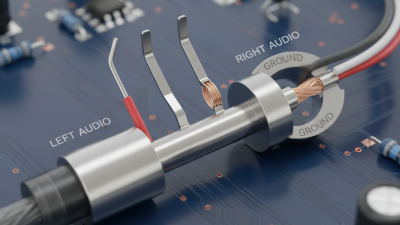
As global equipment makers prepare for 2026, Cable Leads are becoming more than simple connection parts. They influence safety, uptime, installation speed, and service costs. Buyers now compare conductor materials, insulation ratings, connector quality, bend performance, and traceability. A cable that looks strong may still fail near a hot motor or sharp cabinet edge. Small details matter.
Industry data supports this growing attention. Grand View Research reports that the global cable assemblies market was valued at approximately USD 70.61 billion in 2023. It also forecasts steady growth through 2030, supported by telecommunications, automotive systems, industrial automation, and data centers. MarketsandMarkets has similarly identified rising demand for wire and cable products, driven by electrification, infrastructure investment, and connected equipment. These reports provide useful direction, but they cannot replace product-level verification. Market growth does not automatically mean better quality.
This guide examines the 2026 best Cable Leads for global buyers through practical purchasing criteria. It considers IEC compatibility, RoHS and REACH documentation, operating temperature, voltage ratings, shielding, pull strength, and supplier consistency. Experienced buyers should request test records, sample approvals, and batch traceability before large orders. A bright connector is not proof of reliability. Neither is a low price. IEC standards can establish a baseline, while ISO 9001 processes may improve manufacturing control. However, supplier audits still matter. No ranking is perfect. A spreadsheet may miss a loose crimp, delayed shipment, or unclear technical drawing. The strongest choice balances verified performance, regional compliance, lifecycle cost, and dependable communication.
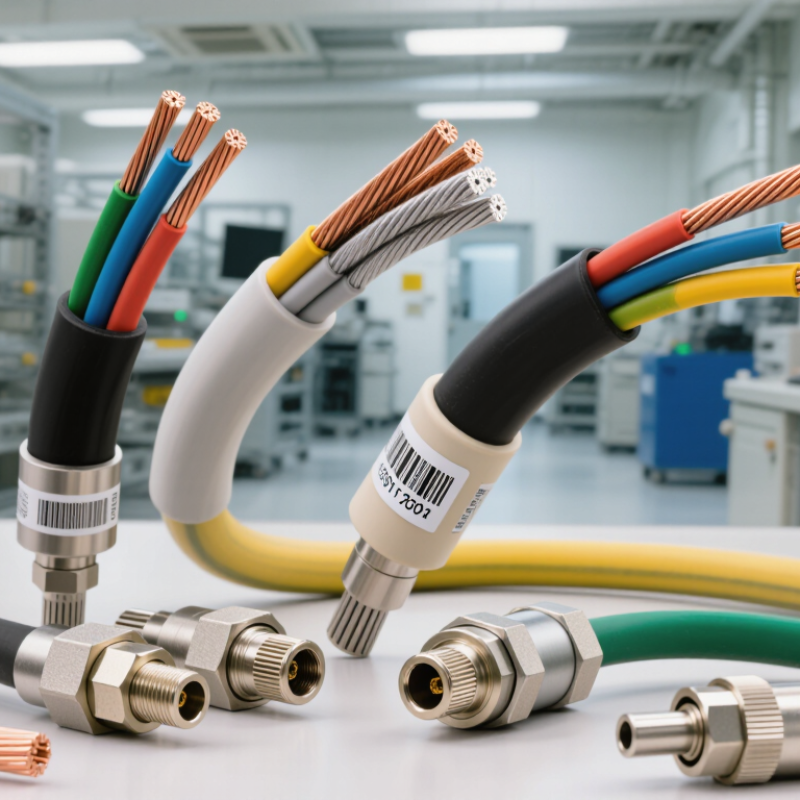
Cable leads are flexible assemblies that connect equipment to power, signals, or control systems. They may include copper conductors, insulation, terminals, plugs, and protective jackets. Their design depends on the application. A short lead inside a control cabinet differs greatly from a weather-resistant lead used outdoors.
Global buyers need cable leads because equipment rarely moves across markets with identical connection standards. Voltage, plug shapes, connector sizes, cable lengths, and labeling can vary. A suitable lead should match the equipment’s current rating, signal requirements, operating temperature, and installation environment. Buyers should also request material specifications, inspection records, and compliance documents for the destination market. These details support traceability and reduce unexpected delays.
Tips: Confirm connector drawings before ordering. Ask for samples from the intended production batch. Check conductor size, insulation quality, bend radius, and terminal crimping. Packaging matters too, especially during long-distance shipping. A cable may look reliable but still fail under repeated bending or heat. Small details are easy to miss. In sourcing work, the cheapest option can create replacement costs later. I would also compare test methods, not only test results. Different suppliers may describe “passed” differently. That point deserves more attention.
In 2026, global buyers can choose USB-C leads, coaxial cables, twisted-pair data cables, fiber-optic leads, and industrial power assemblies. Each type solves a different problem. USB-C suits compact charging and data transfer. Coaxial designs protect high-frequency signals. Twisted-pair cables reduce electromagnetic interference in network equipment. Fiber uses glass or plastic cores, making it suitable for long-distance, high-bandwidth links.
Copper remains the practical choice for power and short data runs. Aluminum costs less and weighs less, but it needs careful connector design. Grand View Research’s Wire and Cable Market report valued the global market above USD 200 billion and projected roughly 4.2% annual growth through 2030. That growth increases material choices, not necessarily product quality. Plastic jackets also matter. PVC is economical and flexible. LSZH compounds reduce smoke and corrosive gases indoors. TPU resists abrasion, oil, and repeated bending. Silicone remains useful near heat, although it can tear under sharp mechanical stress. Short runs matter. IEC 60228 supports consistent conductor classifications, while IEC 60332 helps buyers evaluate flame behavior.
A low-cost copper lead may perform well in a clean office but fail beside motors. A shielded cable may be unnecessary in a quiet cabinet. I would not select by price alone. Buyers should verify conductor size, temperature rating, bend radius, shielding, connector plating, and test documentation. That assumption needs testing. Supplier claims should match recognized standards and independent inspection records.
What Are the 2026 Best Cable Leads for Global Buyers?
The best cable lead is not always the thickest or most expensive option. Global buyers should compare conductor size, current capacity, insulation quality, and connector design. A reliable lead should remain stable during repeated bending, temperature changes, and daily handling. Field inspections often reveal weak moulding near the connector. That small defect can cause heat, signal loss, or early failure. Fit matters.
Compatibility requires more than matching two connector shapes. Check voltage, frequency, pin arrangement, polarity, cable length, and equipment requirements. Data leads also need suitable transmission standards and shielding. A cable may work during a quick test but fail beside motors or wireless equipment. Safety markings and test documents should come from traceable laboratories. Paper claims are not enough. This is where buyers sometimes judge too quickly.
Tips: Request samples before large orders. Test them under realistic load, movement, and heat. Confirm dimensions with drawings, not photographs. Keep records of inspection results and supplier responses. A higher current rating may not improve safety if the plug, fuse, or socket is unsuitable. Also review regional installation rules before shipment. I have seen technically strong cables rejected because their local connection system was overlooked. That mistake is avoidable, but product teams still make it.
For global buyers, the best cable lead is not simply the cheapest or thickest option. It must match the destination market, appliance rating, and installation environment. The IEA Electricity 2024 report forecasts global electricity demand to grow by about 3.2% annually from 2024 to 2026. This growth increases demand for safer, more durable electrical accessories.
Compliance starts with the correct IEC standard. IEC 60227 covers PVC-insulated cables up to 450/750 V, while IEC 60245 covers rubber-insulated cables at similar voltage levels. IEC 60320 applies to appliance couplers and detachable power connections. Buyers should check conductor size, rated temperature, insulation thickness, bending performance, and plug compatibility. Small details matter. A lead that passes a voltage test may still fail after repeated flexing. That weakness is often overlooked.
International shipments should also address material and fire requirements. RoHS limits several hazardous substances in electrical products, while REACH supports chemical transparency in relevant markets. For construction-related applications, EN 50575 may apply to reaction-to-fire performance. Ask for test reports from laboratories operating under ISO/IEC 17025 and verify cable markings against the shipment documents. The IEC System of Conformity Assessment for Electrotechnical Equipment and Components can provide additional confidence where accepted. Paperwork is not proof by itself. Some buyers still rely too heavily on certificates without checking production consistency, traceability, or batch samples. That is an uncomfortable gap, but it deserves attention.
| Cable Lead Type | Typical International Standard(s) | Typical Electrical Scope | Best-Fit Applications | Key Construction and Safety Requirements | Major Market Considerations | Buyer Verification Checklist |
|---|---|---|---|---|---|---|
| PVC Flexible Power Lead | IEC 60227 IEC 60320 IEC 60884-1 RoHS | Commonly rated up to 450/750 V under the applicable IEC 60227 cable type; actual rating depends on the designated construction. | Indoor appliances, office equipment, lighting equipment and general low-voltage power connections. | Correct conductor cross-sectional area, insulation thickness, polarity, strain relief, flexing performance and resistance to abnormal heat. | European and many IEC-based markets; plug and socket configuration must match the destination country. | Request the exact cable designation, conductor size, rated voltage, test report, plug standard and product marking. Confirm that the connector rating matches the cable rating. |
| Rubber or Elastomer Flexible Lead | IEC 60245 IEC 60320 IEC 60884-1 | Commonly rated up to 450/750 V for applicable IEC 60245 flexible cable types. | Portable tools, workshop equipment, outdoor-use appliances and applications requiring greater mechanical flexibility. | Flexible stranded conductors, abrasion resistance, appropriate sheath material, resistance to oil or moisture where specified, and effective cable anchorage. | Suitable rubber designation and environmental rating are important for outdoor or industrial use; local plug approval may still be required. | Check the temperature range, oil and water resistance, minimum bending radius, flexing test results and suitability for the intended duty cycle. |
| North American Flexible Cord Set | UL 62 CSA C22.2 No. 49 National Electrical Code | Typical cord-set ratings include 125 V or 250 V, but the permitted rating depends on the cord type, conductor size and connector configuration. | Household appliances, information-technology equipment, tools and consumer products intended for the United States or Canada. | Recognized cord construction, correct grounding arrangement, molded or certified terminations, strain relief and appropriate current rating. | United States and Canada use different certification systems and installation rules from many IEC markets; a CE mark does not replace applicable North American certification. | Verify the required certification mark, cord type, AWG conductor size, ampere rating, plug configuration, grounding method and destination-country requirements. |
| Appliance Coupler Lead | IEC 60320-1 IEC 60320-2-2 IEC 60320-2-3 | Typically used in equipment rated for mains supplies up to 250 V, subject to the specific coupler and national implementation. | Removable power leads for computers, monitors, audio equipment, laboratory devices and household appliances. | Correct appliance inlet and connector pairing, touch protection, temperature classification, contact durability, creepage and clearance. | Connector shapes are not universally interchangeable. Some equipment requires hot-condition couplers or higher-temperature cable constructions. | Confirm the exact inlet/coupler type, temperature class, current rating, pin configuration, cable cross-section and mechanical retention. |
| Medical Electrical Equipment Lead | IEC 60601-1 IEC 60320 IEC 60601-1-11 | Usually based on the equipment’s declared mains voltage and protection classification; the complete lead assembly must support the medical equipment design. | Medical electrical equipment, patient-care areas and home healthcare equipment where the product standard requires medical-grade considerations. | Protective earthing or reinforced insulation as applicable, leakage-current control, robust strain relief, cleanability and compatibility with the equipment’s risk controls. | Medical-device obligations are product- and market-specific. A general-purpose power cord should not be treated as a medical-grade assembly without evaluation. | Review the equipment risk assessment, leakage-current data, protective-earth continuity, connector compatibility, cleaning requirements and applicable conformity documentation. |
| Outdoor and Industrial Extension Lead | IEC 60245 IEC 60884-1 IEC 60529 IEC 61316 | Voltage and current ratings vary by cable, plug, socket and assembly design; common IEC flexible-cable classes are rated up to 450/750 V. | Construction sites, gardens, temporary power distribution and industrial maintenance. | Impact and abrasion resistance, suitable IP protection, protective earthing, thermal performance, cable reel derating and resistance to moisture or chemicals where required. | Outdoor suitability is not established by voltage rating alone. The complete assembly and its enclosure must support the claimed IP level. | Check IP testing of the complete assembly, cable reel operating instructions, maximum unwound and wound current, residual-current protection requirements and local workplace rules. |
| High-Temperature Appliance Lead | IEC 60245 IEC 60320 IEC 60335-1 | Electrical rating is determined by the complete cable and connector assembly; temperature class must be selected for the equipment’s hot-zone conditions. | Cooking appliances, heaters, heat-producing equipment and devices with elevated terminal or ambient temperatures. | Heat-resistant insulation and sheath, temperature-rated terminals, suitable bend protection and resistance to ignition or abnormal heat as required by the end-product standard. | Connector temperature classification can be more restrictive than the cable’s temperature rating. National deviations may affect the final approval route. | Compare measured terminal temperatures with the lead’s declared temperature class; verify connector temperature rating, glow-wire or abnormal-heat evidence where applicable. |
| Low-Smoke, Halogen-Free Lead | IEC 60754 IEC 61034 EN 50575 CPR | Voltage rating depends on the cable design; fire-performance classification is a separate property from electrical voltage and current rating. | Public buildings, transport facilities, data rooms and installations where smoke and corrosive gas reduction is required. | Low-acid-gas emission, smoke-density performance and flame-spread characteristics must be supported by the relevant test method and classification. | In the European Union, EN 50575 and the Construction Products Regulation can apply to permanently installed construction cables; not every detachable appliance lead falls within the same scope. | Confirm whether the product is in CPR scope, request the applicable Euroclass documentation, and distinguish LSZH claims from verified fire-performance classification. |
| Shielded Data or Signal Lead | IEC 61156 ISO/IEC 11801 EMC Directive | Signal performance is specified by bandwidth, impedance, attenuation and other transmission parameters rather than mains voltage. | Industrial controls, networking, instrumentation and equipment interconnection in electrically noisy environments. | Controlled impedance, pair geometry, shielding effectiveness, connector termination, bend performance and separation from mains conductors. | Performance category and connector system must be compatible with the installed channel; EMC compliance is normally assessed at equipment or system level. | Request insertion-loss, return-loss, crosstalk, shielding and continuity data; verify the connector pinout and the required installation category. |
| Halogenated or Flame-Retardant Control Lead | IEC 60332 IEC 60754 IEC 61034 | Electrical rating depends on the conductor, insulation system and installation method; fire tests do not define the operating voltage. | Control cabinets, machinery, building services and equipment requiring specified flame-spread performance. | Flame propagation performance, conductor identification, mechanical protection and compatibility with cable glands or terminal blocks. | Single-cable flame tests and bundled-cable fire tests are different. The requested test standard should match the installation arrangement. | Identify the exact IEC 60332 part and test configuration; verify conductor size, temperature rating, gland compatibility and documentation for the complete lead. |

What Are the 2026 Best Cable Leads for Global Buyers?
In 2026, reliable cable leads start with a dependable supplier, not a polished product photo. Global buyers should request complete drawings, conductor details, insulation materials, connector specifications, and operating limits. A supplier should explain copper purity, strand structure, crimping methods, and bend performance clearly. Vague answers create expensive delays.
Ask for samples from the same production line used for mass orders. Check terminal alignment, jacket thickness, pull strength, and contact resistance. For flexible leads, record the bend radius and test repeated movement under realistic conditions. Request batch records, inspection results, and material declarations. Relevant regional safety requirements should also be discussed before purchase. A certificate alone proves little. I have seen acceptable samples followed by inconsistent production, so supplier audits still matter.
Tips: Compare at least three suppliers using the same technical checklist. Visit the factory when order value justifies it, or arrange a live video inspection. Confirm tooling ownership, minimum order quantities, lead times, packaging, and replacement procedures in writing. Ask how rejected parts are isolated. Good communication is evidence, but it is not proof. Even experienced buyers sometimes overlook simple details, such as label durability or moisture protection during ocean transport. Select suppliers who welcome technical questions and admit production limits. That honesty may prevent larger problems later.
How can global buyers select reliable cable lead suppliers? A practical starting point is to match the insulation material with the required continuous operating temperature, then verify the supplier’s test reports, traceability, and compliance documentation.
Reference values shown are commonly specified continuous operating-temperature ratings: PVC around 70°C, XLPE around 90°C, silicone rubber around 180°C, and PTFE around 260°C. Actual ratings depend on cable construction, thickness, voltage, installation conditions, and the applicable standard. Buyers should request product-specific datasheets and independent test evidence before approval.