


The Complete Speaker Manufacturing Process: How OEM/ODM Audio Brands Build High-Performance Sound
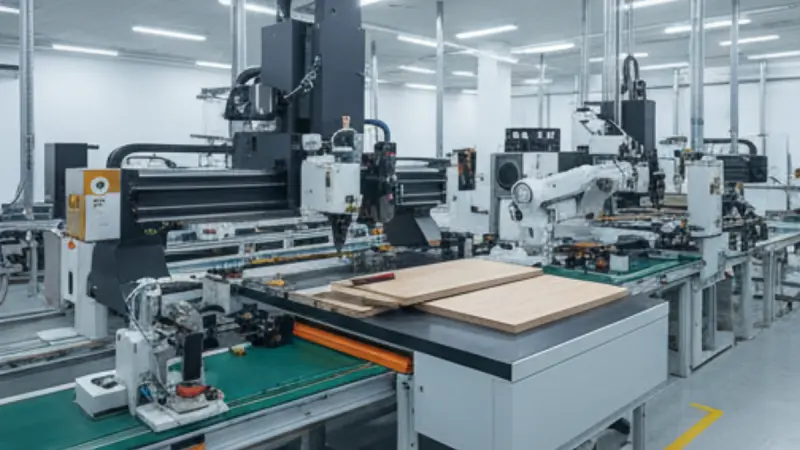
Key Takeaways
• The speaker manufacturing processinvolves a seamless integration of acoustic engineering, precision materials, and rigorous quality control.
• Early alignment on performance, mechanical, and cost targets is key to OEM/ODM success.
• Digital modeling, CNC machining, and automated acoustic testing now define modern speaker production.
• For B2B clients, selecting reliable component suppliers—like JINGYI Audio (ZZYZX)—ensures lasting product consistency and brand credibility.
• S. companies benefit from hybrid supply chains that combine Asian efficiency with local logistics flexibility.
Stage 1: From Concept to Prototype — Designing for OEM/ODM Success
Creating a high-performance speaker starts with more than just a sketch.
For OEM and ODM clients, the design phase defines every downstream cost, acoustic behavior, and production step.
What Defines a Successful Speaker Design for OEM/ODM Projects?
When a U.S. brand approaches an OEM partner, three questions always arise:
1.Performance Requirements— frequency response, SPL, distortion, and impedance.
2.Mechanical Constraints— size, shape, and mounting configuration.
3.Cost and Environmental Considerations— material efficiency and sustainability.
A clear technical brief is the foundation for successful collaboration. Top manufacturers work directly with engineers to refine both electrical and acoustic simulations before a single part is made.
How CAD Modeling and FEA Simulation Accelerate Development
Modern speaker engineering uses tools like Finite Element Analysis (FEA) and Boundary Element Modeling (BEM) to simulate magnetic fields, cone motion, and enclosure resonance.
This digital-first approach reduces prototyping cycles by up to 40%, allowing OEM brands to validate ideas faster and minimize tooling risks.
Inside the Workshop — The Speaker Driver Manufacturing Process
At the heart of every speaker is its driver — the component that transforms electrical energy into sound.
Core Components of a Speaker Driver
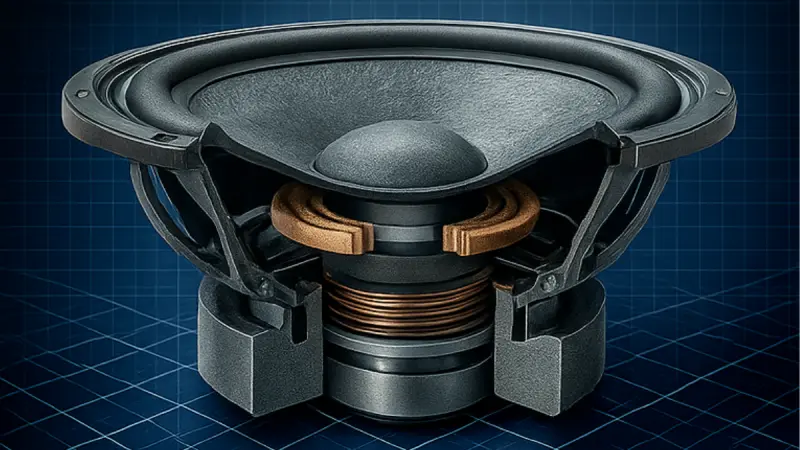
A typical dynamic driver consists of:
• Magnet System:Provides the magnetic field that interacts with the coil.
• Voice Coil:Converts the electrical signal into mechanical vibration.
• Diaphragm (Cone):Moves air to create audible sound waves.
• Spider and Surround:Maintain alignment and control motion.
• Basket (Frame):Provides structure and stability.
Each element requires precise assembly and alignment within micrometer tolerances.
How Diaphragm Materials Affect Sound Quality
The cone material shapes a speaker’s tonal character:
• Paper:Excellent damping, warm natural tone.
• Polypropylene:Consistent performance and moisture resistance.
• Aluminum:High stiffness, great transient response.
• Composite Fibers (e.g., Kevlar, Carbon):Premium performance for low distortion.
👉 Case Example: Dynaudio’s one-piece MSP cones are engineered for perfect uniformity—an approach mirrored by many top OEM partners.
Why Voice Coil Engineering Defines Performance
Voice coils determine how cleanly a speaker reproduces music.
• Copper wireimproves low-frequency control.
• Aluminum wireenhances high-frequency clarity.
• Overhung designsdeliver power, while underhung designs prioritize accuracy.
The choice depends on product category—home audio, car audio, or professional PA systems.
More Than Just a Box — The Science of Speaker Cabinet Manufacturing
Speaker cabinets aren’t simply enclosures; they are acoustic tools designed to minimize distortion and manage sound reflections.
Why Cabinet Design Shapes Tonal Accuracy
Cabinets prevent phase cancellation from back-wave energy.
Internal bracing, damping foam, and tuned ports reduce unwanted vibrations.
Even slight structural weaknesses can color the sound. That’s why top-tier manufacturers invest in multi-layer MDF, birch plywood, or polymer composites.
Advanced Manufacturing Techniques
High-end speaker factories use:
• CNC machiningfor precision (±0.1mm tolerance).
• Vacuum pressingfor curved enclosures.
• Matrix™ bracing systems(inspired by Bowers & Wilkins) for superior stiffness.
Each step ensures the cabinet supports, rather than distorts, the sound.
Ensuring Consistency — The Quality Control Process
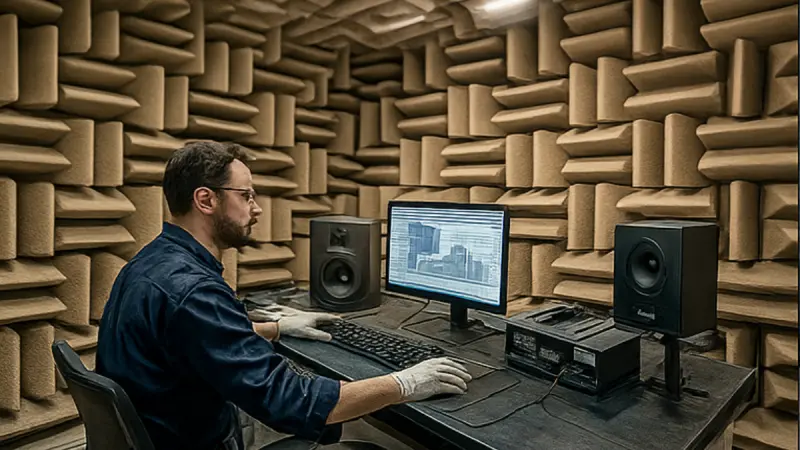
No matter how advanced the design, success depends on testing.
Multi-Stage Quality Control in Modern Factories
1.IQC (Incoming Quality Control):Inspects raw materials and parts.
2.IPQC (In-Process Quality Control):Monitors key assembly points.
3.EOL (End-of-Line Testing):Verifies acoustic and electrical specs.
These stages ensure that every unit meets design intent.
Acoustic and Electrical Tests
At the end of production, each speaker undergoes:
• Frequency Response Measurement
• Impedance Sweep
• Total Harmonic Distortion (THD) Test
• Rub & Buzz Detection
Using systems like Klippel and Audio Precision, OEM partners catch flaws invisible to the human ear.
A Strategic Choice for U.S. Brands — Navigating the Global OEM/ODM Landscape

U.S. companies face a crucial question:
Should I manufacture locally or partner with Asia-based suppliers?
U.S. vs. Asian Manufacturing
• S. Manufacturing:Faster communication, shorter shipping, higher labor cost.
• Asia (China, Thailand, Vietnam):Lower cost, mature supply chain, advanced automation.
The Hybrid Advantage
A growing trend is dual-region manufacturing, allowing flexibility in cost and logistics.
JINGYI Audio’s dual bases in China and Thailand give clients scalable production with tariff diversification and local support.
The Unseen Heroes — Audio Components That Define System Reliability
Even the best drivers can’t perform if connectors or cables fail.
Why Component Quality Matters
• High-purity OFC conductors (99.99%)maintain clean signal transmission.
• Gold-plated connectorsprevent corrosion.
• Precision-machined plugsensure mechanical stability under vibration.
Case Study: JINGYI Audio (ZZYZX) as a Trusted Partner
With over 30 years of OEM/ODM experience, JINGYI Audio specializes in:
• Professional-grade speaker cables and connectors.
• Durable stands and accessories.
• ISO-certified production with B2B export experience.
Their global client base includes premium audio brands, showcasing JINGYI’s reliability and consistency as a long-term supplier.
Frequently Asked Questions (FAQ)
How Long Does the Speaker Manufacturing Process Take?
From design to mass production, expect 4–6 months:
- Design & simulation: 4–8 weeks
- Prototyping: 3–4 weeks
- Tooling: 6–10 weeks
- Production: 30–60 days
What’s the Difference Between OEM and ODM Production?
• OEM:You own the design; the factory produces it.
• ODM:The factory provides a pre-engineered design for branding/customization.
How Can I Protect My Intellectual Property Overseas?
Use NDAs, secure contracts, and work with manufacturers with verifiable export records—like JINGYI Audio, who serves established U.S. brands.
Can I Supply My Own Components?
Yes. Most OEM factories accept customer-specified parts or can source equivalent high-quality alternatives.
How Do I Start an OEM/ODM Project?
Begin with a detailed brief—performance targets, price range, and design direction.
Early communication with engineering teams accelerates project approval.
Conclusion
Understanding the speaker manufacturing process empowers U.S. audio brands to make informed decisions when selecting OEM/ODM partners.
By blending engineering precision, global logistics insight, and component reliability, companies like JINGYI Audio ensure every sound product meets the highest standards of quality and consistency.
🎯 Ready to collaborate?
Explore JINGYI Audio’s OEM/ODM capabilities at site_5615465d-0395-48c6-b01f-dc3d38213fc5 and elevate your brand’s audio performance from design to delivery.