2026 Best Flat Cable Types for Your Electronic Needs?
In the ever-evolving world of electronics, selecting the right type of Flat Cable is crucial. According to industry expert Dr. Emily Hart, "The right Flat Cable can enhance performance and reduce interference." This statement highlights the importance of understanding different types of Flat Cables available today.
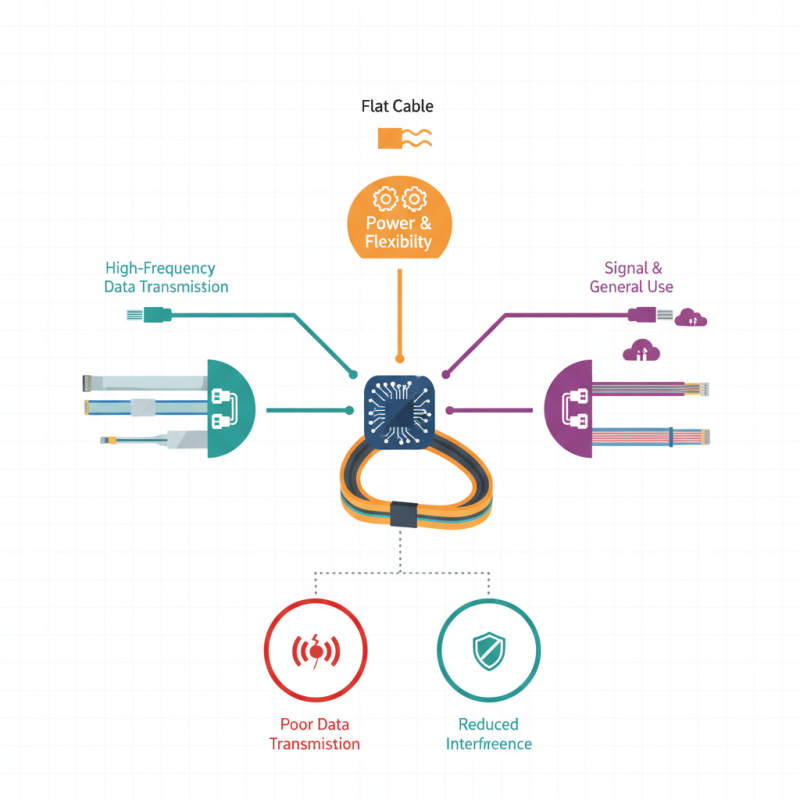
Flat Cables offer flexibility in design and usage. They come in various materials, each serving specific purposes. Some may struggle to meet high-frequency demands, while others excel. For instance, choosing the wrong Flat Cable could result in poor data transmission.
As technology advances, the options for Flat Cables continue to grow. However, not every option is suitable for every application. Users must consider their specific electronic needs. As Dr. Hart wisely notes, careful selection is key to ensuring reliability and efficiency in your projects.
Types of Flat Cables: An Overview for Electronic Applications
Flat cables play a crucial role in various electronic applications. They come in different types, each suited for specific needs. The most common types include ribbon cables, multiplexed cables, and flat flexible cables. Ribbon cables are often used in computers, connecting components on a circuit board. Their flat design allows for easy routing in tight spaces.
Multiplexed cables are ideal for transmitting multiple signals simultaneously. They reduce clutter and interference, making them efficient for audio-visual setups. Flat flexible cables, on the other hand, are versatile and flexible. They can bend easily without causing damage, making them perfect for portable devices. However, choosing the right flat cable can be tricky. Many users struggle with compatibility issues. It's vital to consider both the electrical requirements and the physical environment.
Installation can also pose challenges. Many overlook the importance of proper connectors. A poor connection can lead to signal loss or failure. Users might find that certain cables do not perform as expected under stress. Researching and testing various options is essential. Understanding these nuances can greatly improve the performance of your electronic devices.
2026 Best Flat Cable Types for Your Electronic Needs
| Cable Type |
Application |
Advantages |
Disadvantages |
| Flat USB Cable |
Data transfer and charging |
Flexible, easy to store |
Limited durability |
| Flat HDMI Cable |
Audio/Video transmission |
Space-saving, high-quality signal |
More expensive |
| Flat Ethernet Cable |
Networking |
Faster speeds, less clutter |
Limited bend radius |
| Flat Audio Cable |
Professional audio setups |
Reduced interference |
Bulky connectors |
| Flat Power Cable |
Power supply for electronics |
Lightweight, easy installation |
Lower current ratings |
Key Features to Consider When Choosing Flat Cables
When choosing flat cables for electronic applications, several key features should be considered. Cable flexibility plays a crucial role. According to a 2022 industry report, flexible cables reduce the risk of breaking in tight spaces. A cable that bends easily is essential for devices that undergo frequent movement. Look for cables with a good balance between stiffness and flexibility.
Another important factor is the thickness or gauge of the cable. Thicker cables can handle more current, which is vital for high-performance devices. For example, a 16 AWG flat cable can carry up to 13 amps, while a thinner 24 AWG only supports about 3 amps. Depending on your needs, choosing the right gauge could enhance performance.
Then comes the insulation material. Different materials can affect durability and heat resistance. PVC is common, but alternatives like TPE offer better thermal properties. Recent studies show that TPE-insulated cables last longer under extreme temperatures. Think about your specific environment when selecting materials. Don't overlook these crucial details, as they can lead to significant performance issues down the line.
Common Uses of Flat Cables in Consumer Electronics
Flat cables are increasingly popular in consumer electronics due to their unique advantages. They often occupy less space and can be more flexible than traditional round cables. This flexibility makes flat cables ideal for sleek devices like laptops and smartphones. According to industry reports, the demand for flat cables is projected to grow by 12% annually, driven by the rise of portable electronics.
Common applications for flat cables include internal connections in laptops and gaming consoles. These cables help manage space efficiently. Many users may not realize that a flat cable can also reduce electromagnetic interference. This is crucial for devices that rely on high-speed data transmission. In some cases, improper installation of these cables can create performance issues. It is important to consider the quality of the flat cable used.
Furthermore, flat cables are frequently utilized for connecting various peripherals. From printers to external hard drives, they streamline connections. Often, performance can be hampered by using subpar cables. Despite their advantages, manufacturers need to keep quality consistent. Understanding the impact of materials and design is vital for future improvements.
2026 Best Flat Cable Types for Your Electronic Needs
This chart displays the common uses of various types of flat cables in consumer electronics for the year 2026. The data reflects the percentage of usage across different categories.
Comparative Analysis of Flat Cable Materials and Their Benefits
When selecting flat cable types for electronic needs, material properties play a crucial role. The most common flat cable materials are PVC, TPE, and PUR. Each has its strengths and weaknesses. For instance, PVC is affordable and widely used. However, it may lack durability in high-temperature environments. In contrast, TPE offers flexibility and resistance to moisture. Yet, it can be costlier than PVC.
A recent industry report highlights that the global flat cable market is expected to grow significantly. The demand for lightweight and space-saving solutions drives this growth. Engineers find themselves needing to balance cost with performance. PUR cables are robust and ideal for harsh conditions, but they require careful handling due to their rigidity. This can complicate installation.
Moreover, the environmental impact of flat cable materials cannot be ignored. PVC production is energy-intensive and raises concerns. TPE is often marketed as a greener alternative, yet its recycling capabilities can be questionable. Choosing the right material involves navigating trade-offs between function, cost, and environmental responsibility. It's an ongoing challenge for professionals in the electronics industry.
Future Trends in Flat Cable Technology and Applications
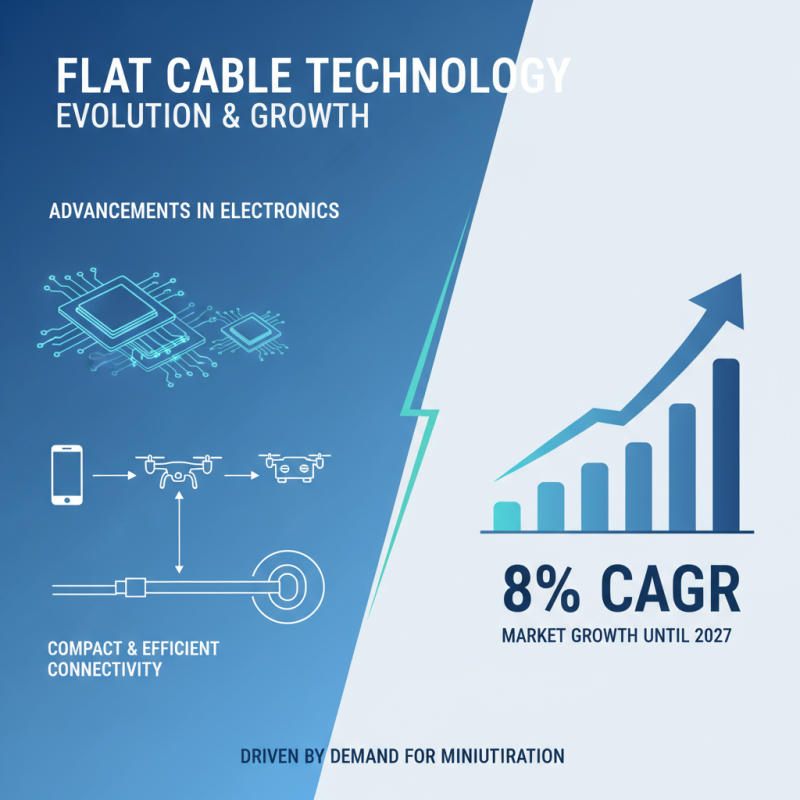
In recent years, flat cable technology has experienced significant advancements. As electronics evolve, so do the types of cables we use. Reports indicate a projected market growth of 8% CAGR in flat cables until 2027. This trend is driven by the increasing demand for compact and efficient connectivity solutions.
Emerging applications span various sectors, including automotive and smart homes. In smart devices, flat cables facilitate better organization and tight spaces. They can deliver power and data simultaneously. Miniaturization is key. Engineers focus on reducing the size while enhancing durability. However, manufacturers must address the challenge of maintaining performance at lower dimensions.
**Tip:** When choosing flat cables, assess the environment. Temperature fluctuations and potential wear can affect durability.
Another trend involves the use of sustainable materials. More companies are investing in eco-friendly options, aligning with global sustainability goals. Yet, the effectiveness of these materials may vary. Testing is crucial.
**Tip:** Consider the cable's flexibility and tensile strength for long-term use. Balancing performance and sustainability can lead to better outcomes. Crafting cables that meet both criteria remains a challenge. As the industry evolves, continuous innovation is essential.